
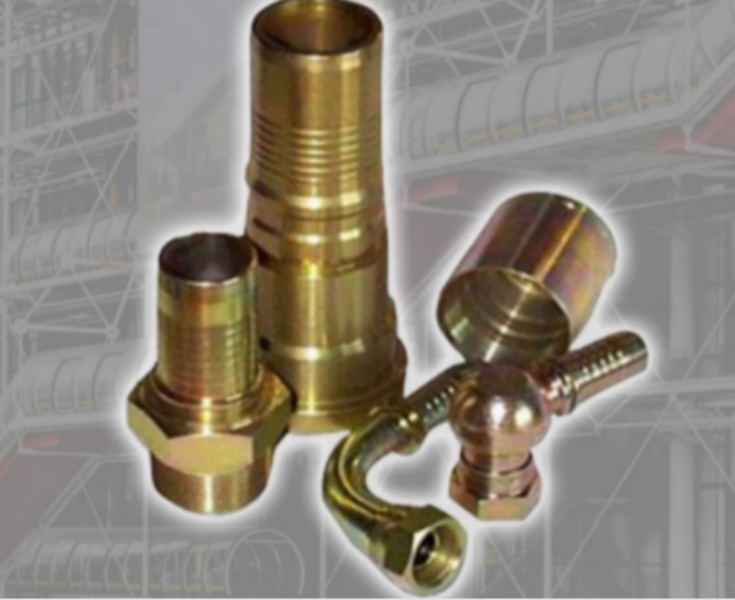
Hose End Fittings are essential components used to connect hoses to hydraulic systems, pneumatic lines, and fluid transfer equipment. These fittings ensure a secure and leak-proof connection between the hose and machinery such as pumps, cylinders, valves, compressors, and industrial tools. Designed to withstand high pressure, vibration, and temperature variations, hose end fittings play a crucial role in maintaining system efficiency and safety. Hose end fittings are widely used in industries including construction, agriculture, automotive, oil & gas, manufacturing, mining, and marine applications. They are available in various configurations such as straight fittings, 45° elbows, 90° elbows, tees, crosses, and reducers. Depending on the application, they can be supplied in threaded types like BSP, NPT, JIC, SAE, and Metric standards to ensure compatibility with different hydraulic and fluid systems. These fittings are typically manufactured from high-quality materials such as carbon steel, stainless steel, brass, and alloy steel. Stainless steel hose end fittings offer excellent corrosion resistance, making them ideal for chemical and marine environments, while carbon steel fittings are commonly used in high-pressure hydraulic systems. Surface treatments like zinc plating or galvanization enhance durability and rust protection. There are mainly two types of hose end fittings: crimped fittings and reusable fittings. Crimped fittings provide permanent, high-strength connections, while reusable fittings are convenient for field repairs and maintenance. Proper installation and correct fitting selection based on hose size, pressure rating, and fluid type are essential for optimal performance. High-quality hose end fittings help prevent leaks, reduce downtime, and ensure smooth fluid transfer, making them a critical part of modern industrial and hydraulic systems.


This is your website preview.
Currently it only shows your basic business info. Start adding relevant business details such as description, images and products or services to gain your customers attention by using Boost 360 android app / iOS App / web portal.
Hose End Fittings Manufacturers In Faridabad
2026-02-28T06:25:30
Hose End Fittings are essential components used to connect hoses to hydraulic systems, pneumatic lines, and fluid transfer equipment. These fittings ensure a secure and leak-proof connection between the hose and machinery such as pumps, cylinders, valves, compressors, and industrial tools. Designed to withstand high pressure, vibration, and temperature variations, hose end fittings play a crucial role in maintaining system efficiency and safety. Hose end fittings are widely used in industries including construction, agriculture, automotive, oil & gas, manufacturing, mining, and marine applications. They are available in various configurations such as straight fittings, 45° elbows, 90° elbows, tees, crosses, and reducers. Depending on the application, they can be supplied in threaded types like BSP, NPT, JIC, SAE, and Metric standards to ensure compatibility with different hydraulic and fluid systems. These fittings are typically manufactured from high-quality materials such as carbon steel, stainless steel, brass, and alloy steel. Stainless steel hose end fittings offer excellent corrosion resistance, making them ideal for chemical and marine environments, while carbon steel fittings are commonly used in high-pressure hydraulic systems. Surface treatments like zinc plating or galvanization enhance durability and rust protection. There are mainly two types of hose end fittings: crimped fittings and reusable fittings. Crimped fittings provide permanent, high-strength connections, while reusable fittings are convenient for field repairs and maintenance. Proper installation and correct fitting selection based on hose size, pressure rating, and fluid type are essential for optimal performance. High-quality hose end fittings help prevent leaks, reduce downtime, and ensure smooth fluid transfer, making them a critical part of modern industrial and hydraulic systems.
2026-02-28T06:25:30


Keywords
- Hose fittings in Faridabad
- Hydraulic system components
- Crimped hose fittings
- Reusable hose end fittings
- Carbon steel hose fittings
- Stainless steel hose fittings
- Oil and gas hose components
- Automotive hydraulic fittings
- Agricultural hose end fittings
- Construction industry hose fittings
- Industrial hose fittings
- High pressure hose fittings
- Leak-proof hose connections
- Pneumatic hose fittings
- Hydraulic hose end fittings
- Hose End Fittings Manufacturers Faridabad
Submit Your Enquiry